ServicesSealants
Dental Sealants in West Concord
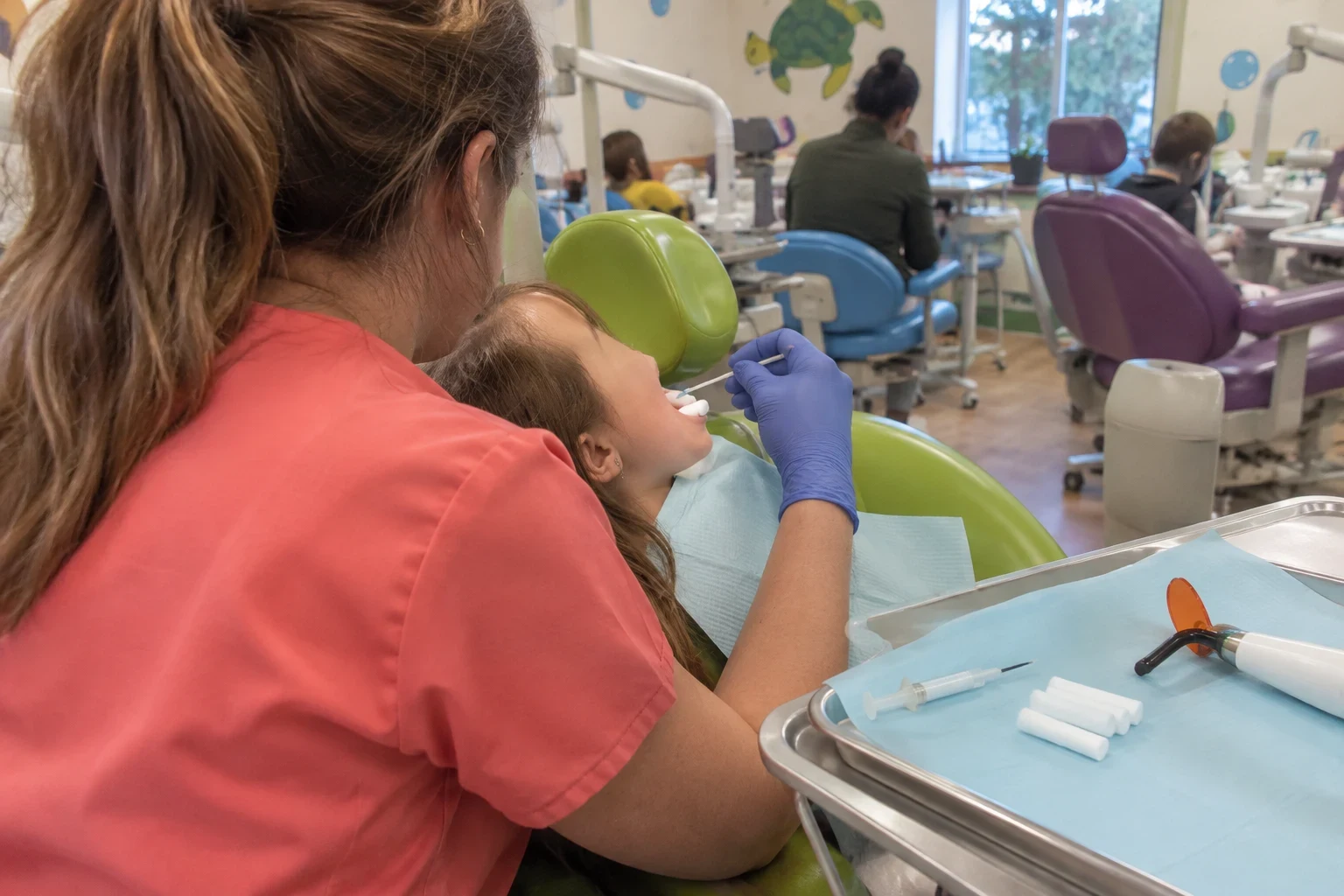
Sealants are a thin, tooth-colored coating we paint into the deep grooves of your child's back molars, where brushing misses and cavities often start. There is no drilling and no numbing, and most kids finish in a short visit. We help you plan them around the years new molars arrive.
A small step that heads off bigger work later
The tops of back molars are covered in tiny pits and fissures. Some are so narrow that toothbrush bristles cannot reach the bottom, which leaves food bits and bacteria tucked away out of reach. That is a big reason so many childhood cavities begin on the chewing surfaces, even in kids with good brushing habits.
A sealant fills those grooves and leaves a smooth surface that is easier to keep clean. It does not replace brushing or fluoride. It covers the spot where those two have the hardest time.
Timing matters. First permanent molars usually come in around age 6, and second molars around age 12. Sealing them soon after they come through, before decay has a chance to begin, keeps fillings off the calendar. We track which teeth are on the way at each exam, so you know what is next and roughly when.
What a sealant visit includes
- A close look at each tooth first
- A sealant should go over healthy enamel, so we check every groove before we start. If we find an early cavity, we tell you and talk through whether a small filling is the better step.
- Permanent molars and premolars
- Most sealants go on the first and second permanent molars. Premolars with deep grooves can benefit too. In some kids with a higher cavity risk, baby molars are worth sealing as well.
- No drills or shots
- We prepare only the surface of the tooth. Nothing is removed, so there is no need for numbing.
- A coating that hardens in seconds
- We paint the sealant on and harden it with a small blue light, a few seconds per tooth. Your child can eat normally right after the visit.
- Checks at every cleaning
- Sealants wear over time. At each exam and cleaning we look for chips or thin spots and touch them up when needed.
Signs it is time to ask about sealants
New back teeth are coming through
If your child is around 6 or around 12 and you can see new molars, it is a good time to schedule. Sealing soon after they erupt gives the most protection.
Deep or stained-looking grooves
Some molars have deep grooves that trap food and look dark. At an exam we can tell you whether they are just deep or starting to decay.
Cavities in baby teeth
A history of cavities in baby teeth often means the permanent teeth face a higher risk too. Sealants are one way to get ahead of that.
Braces or a snack-heavy schedule
Kids heading into braces, or with long sports seasons and frequent snacks, have a harder time keeping molars clean. A sealant adds protection right where food sits longest.
An older sealant looks worn
If your child had sealants years ago, they may be chipped or partly gone. A quick check tells us whether a touch-up makes sense.
How the appointment goes
- 1
A look and a hello
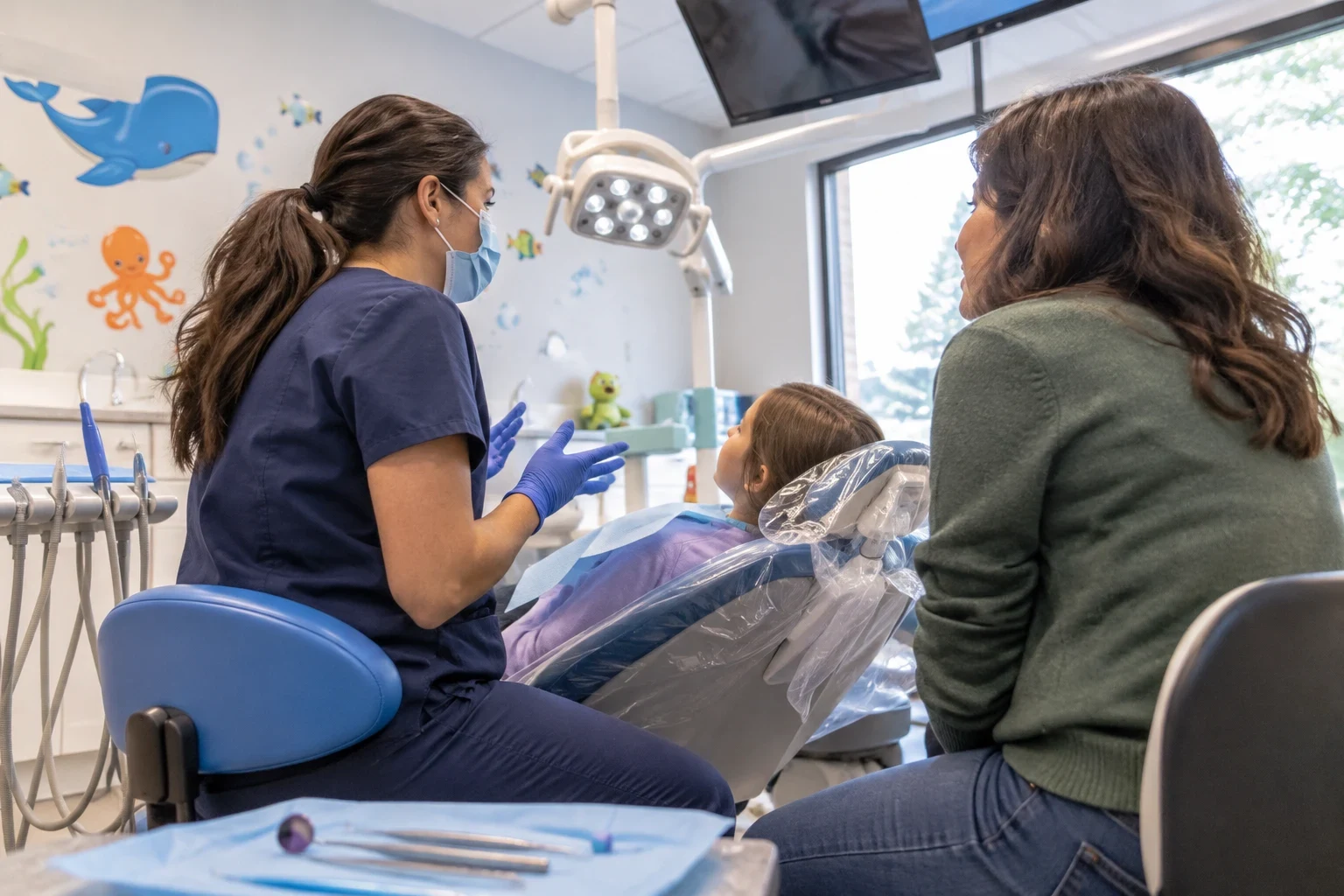
We check the teeth to be sealed and explain each step in kid-friendly words. Many kids like seeing the tools and the blue light before we begin.
- 2
Clean, condition and dry
We polish the chewing surface, apply a mild conditioning gel for a few seconds, rinse it off and keep the tooth dry with cotton. A dry tooth is what lets the sealant bond well.
- 3
Paint and cure
The sealant flows into the grooves like a thin paint. We shine the curing light on it and it hardens right away.
- 4
Bite check and done
We make sure your child's bite feels smooth and normal. Most kids hop out of the chair the same way they got in, ready to eat and drink as usual.
What affects the cost of sealants
Sealants are billed tooth by tooth, and they are among the simpler things we do. Before we begin, we tell you which teeth need them, so you know the total ahead of time. For payment, most insurance plans are welcome, along with Visa, MasterCard and Discover cards, and you can spread the cost with the CareCredit Patient Payment Plan.
- How many teeth
- Sealing two first molars costs less than sealing all four plus premolars. Many families seal the first molars around age 6 and plan the second set for the years ahead.
- Your insurance plan
- Many plans cover sealants on permanent molars for children, often with age or frequency limits. We can help you check what your plan allows so you can time the visit well.
- The condition of the groove
- If a groove already shows early decay, it may need a small filling instead of, or along with, a sealant. We show you what we found and explain the difference before anything is done.
- Touch-up or new sealant
- Repairing a worn spot on an existing sealant is usually a smaller job than placing a new one.
Questions parents ask about sealants
Something not covered here? (978) 733-8887
Does getting a sealant hurt?
No. There is no drilling and no needle. Kids feel the polishing brush, a cool rinse and some air, and they may notice the taste of the conditioning gel. Most say the hardest part is keeping their mouth open.
How long do sealants last?
They can last several years, but they are not permanent. Chewing wears them down over time. We check them at each regular exam and cleaning and repair worn spots, so the protection keeps working through the years when cavities are most likely.
Should baby teeth get sealants?
Not always. We usually focus on permanent molars. If your child has deep grooves in baby molars or has already had cavities, sealing them can make sense, since baby molars often stay in until around age 10 to 12.
Can sealants be done at the same visit as a cleaning?
Often, yes. If your child is comfortable and the teeth are ready, we can place sealants right after exams and cleanings to save you a trip. If not, we set up a short follow-up visit.
Is it worth the drive from a nearby town for something this quick?
Families come to us from Acton, Maynard, Concord and other nearby towns. Because sealants can often be paired with a routine checkup, most families take care of both in one trip.

Plan sealants before the next molars arrive
Tell us your child's age and when their last checkup was, and we will help you choose a good time. New patients can register on the same call.