ServicesFluoride Treatment
Kids' Fluoride Varnish in West Concord
A coat of fluoride varnish goes on in about a minute, causes no pain and helps your child's enamel hold up against sugar and acid until the next visit. We add it to routine checkups, so it becomes a planned part of care rather than a response to a cavity.

A small step that protects healthy teeth
Fluoride is a mineral that helps tooth enamel rebuild after the daily acid attacks that come from snacks, juice and bacteria. In the office we use a fluoride varnish: a thin, sticky coating we paint onto each tooth with a soft brush. It sets as soon as it touches saliva, so there's no tray, no rinsing and nothing for your child to hold in their mouth.
The varnish keeps releasing fluoride into the enamel for several hours. That steady contact is what makes it stronger than toothpaste alone, and it can even help reverse the chalky white spots that show up before a cavity forms.
For most kids we apply it at their regular cleaning, so it adds no extra trip. Planning it alongside exams and cleanings also makes it easier to budget for, since you'll know what's coming at each visit.
What happens during your child's fluoride visit
Checking the teeth first
After the cleaning we look over each tooth so the varnish lands on clean enamel. If we see early white spots or a soft area, we point it out and tell you what it means.
A thin coat, painted on gently
Each tooth gets dried with a bit of gauze, then we brush on a thin layer. Most children are finished in less than a minute, and babies can stay on a parent's lap throughout.
Flavors kids don't mind
The varnish comes in mild flavors rather than a medicine taste. When we have a few on hand, your child gets to choose.
Simple instructions for home
Before you go, we explain what to avoid for the rest of the day and when brushing is fine again. It's short enough to recall on the ride home.
Looking ahead to the next visit
Based on your child's cavity risk, we suggest how often fluoride makes sense and whether sealants or other preventive care are worth booking in advance.
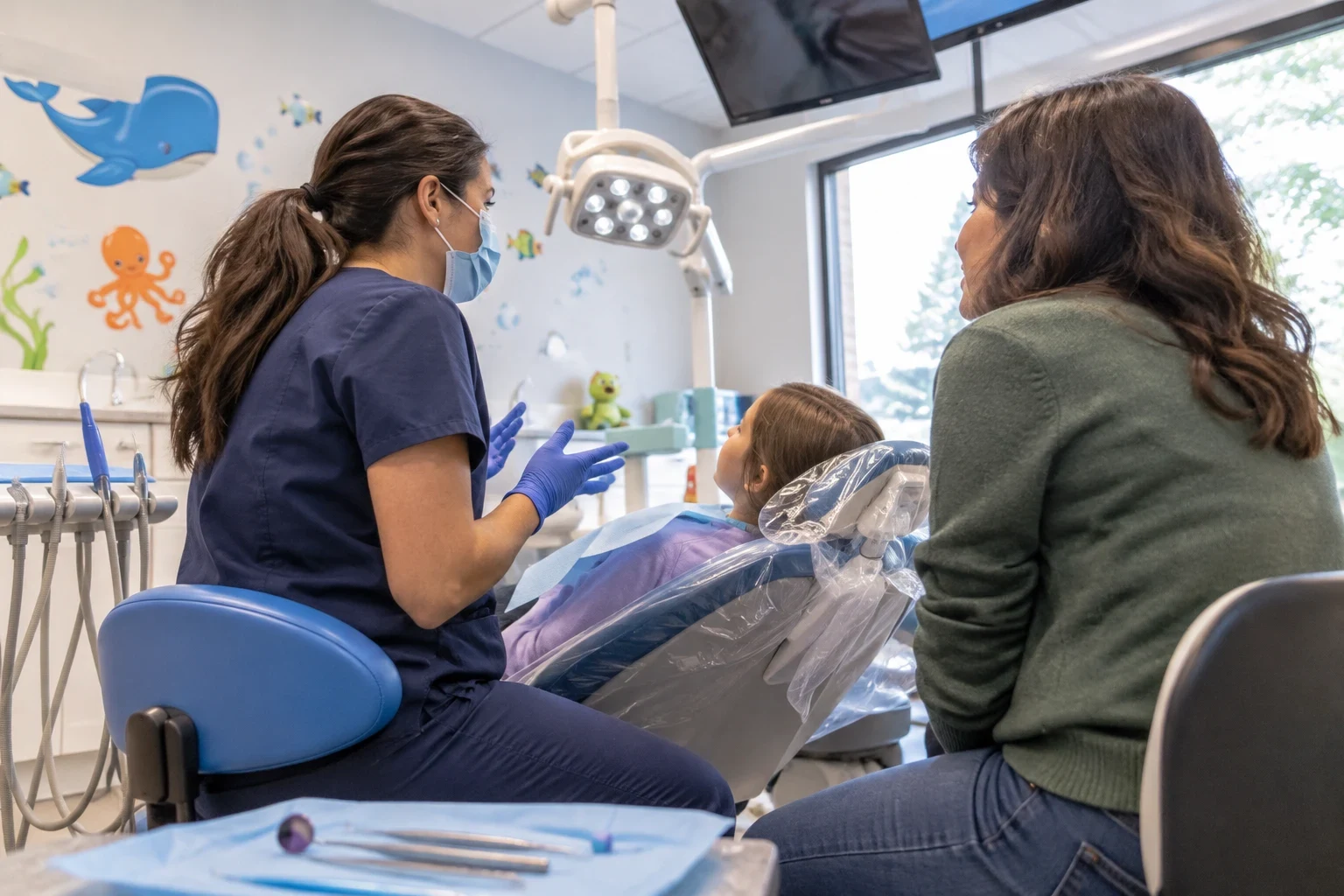
When your child may need more fluoride
- White, chalky patches
- Dull, milky areas near the gumline often mean enamel is losing minerals. Caught early, those spots can harden again with fluoride before a cavity starts.
- A history of cavities
- Children who have needed fillings are more likely to get new cavities. Regular fluoride is one of the simplest ways to stop that pattern.
- Well water at home
- Some households around West Concord use private wells, which may carry little natural fluoride. If you're unsure about yours, we can go over what it means for your child's teeth.
- All-day sipping and snacking
- Juice in a sippy cup, sports drinks and constant snacks keep teeth bathed in acid. More fluoride helps enamel bounce back between meals.
- Braces or tightly packed teeth
- Brackets and snug spaces trap food and are hard to clean. Fluoride protects the spots a toothbrush tends to miss.
What to expect at the appointment
- 1
Clean teeth first
Fluoride usually goes on right after your child's cleaning, because varnish bonds best to freshly cleaned enamel.
- 2
Dry, then brush on
We dry a small group of teeth at a time and paint the varnish on. It feels a bit tacky, and most kids shrug it off.
- 3
Out the door
Nothing to rinse and no sitting and waiting. Your child can talk, swallow and leave right away.
- 4
Later that day
Keep to soft foods and cool drinks for a few hours and pass on crunchy or sticky snacks. A gentle brushing that night or the next morning removes the light yellow tint.
What sets the price of fluoride varnish
Among preventive services, fluoride varnish is a modest charge, and plenty of insurance plans pay for it for kids. What you owe comes down mainly to your coverage and how often your child needs it. Call us ahead of the appointment and we'll walk through the likely cost, so nothing on the bill catches you off guard.
- Your plan's age and frequency rules
- Many plans pay for children's fluoride only until a certain age and only a fixed number of times each year. Knowing those rules in advance lets you time visits so they stay inside what your plan covers.
- How many applications your child needs
- A child at low risk for cavities may only need varnish at the two yearly cleanings. A child at higher risk may do better with added applications between cleanings, and those extra visits can raise your out-of-pocket share.
- Done alongside other care
- We usually apply fluoride at a cleaning visit, so no separate appointment is needed. If your child also needs sealants or fillings, we lay it all out together and you decide what to book first.
- Payment choices
- We take Visa, MasterCard and Discover cards and work with most insurance plans. The CareCredit Patient Payment Plan is available as well, which lets parents spread costs out when several children need care at once.
Fluoride questions from parents
- Is fluoride varnish safe for my baby or toddler?
- Yes. Each application holds only a tiny amount of fluoride, and since it clings to the teeth, very little ends up swallowed. Pediatric dental guidelines call for it once the first teeth arrive. Bring any specific worries to the visit and we'll talk them through.
- Why do my child's teeth look slightly yellow after the visit?
- Certain varnishes leave a light tint while they work. That's expected and short-lived, and it brushes off with the first thorough brushing, usually that evening or the following morning.
- We already use fluoride toothpaste. Is varnish still needed?
- Toothpaste helps daily, but it rinses off fast. Varnish sits on the enamel for hours and gives a stronger dose. Using both makes sense, particularly for kids who have had cavities.
- What is okay to eat after fluoride?
- Soft foods such as yogurt, pasta or applesauce are fine right away. For a few hours, avoid anything hard, crunchy, sticky or very hot so the varnish isn't rubbed off too soon. Water and cool drinks are fine.
- How often does my child need fluoride?
- Twice a year at regular cleanings is plenty for many kids. Children at higher risk for cavities may do better with it every three months. We'll suggest a schedule for your child and tell you why.
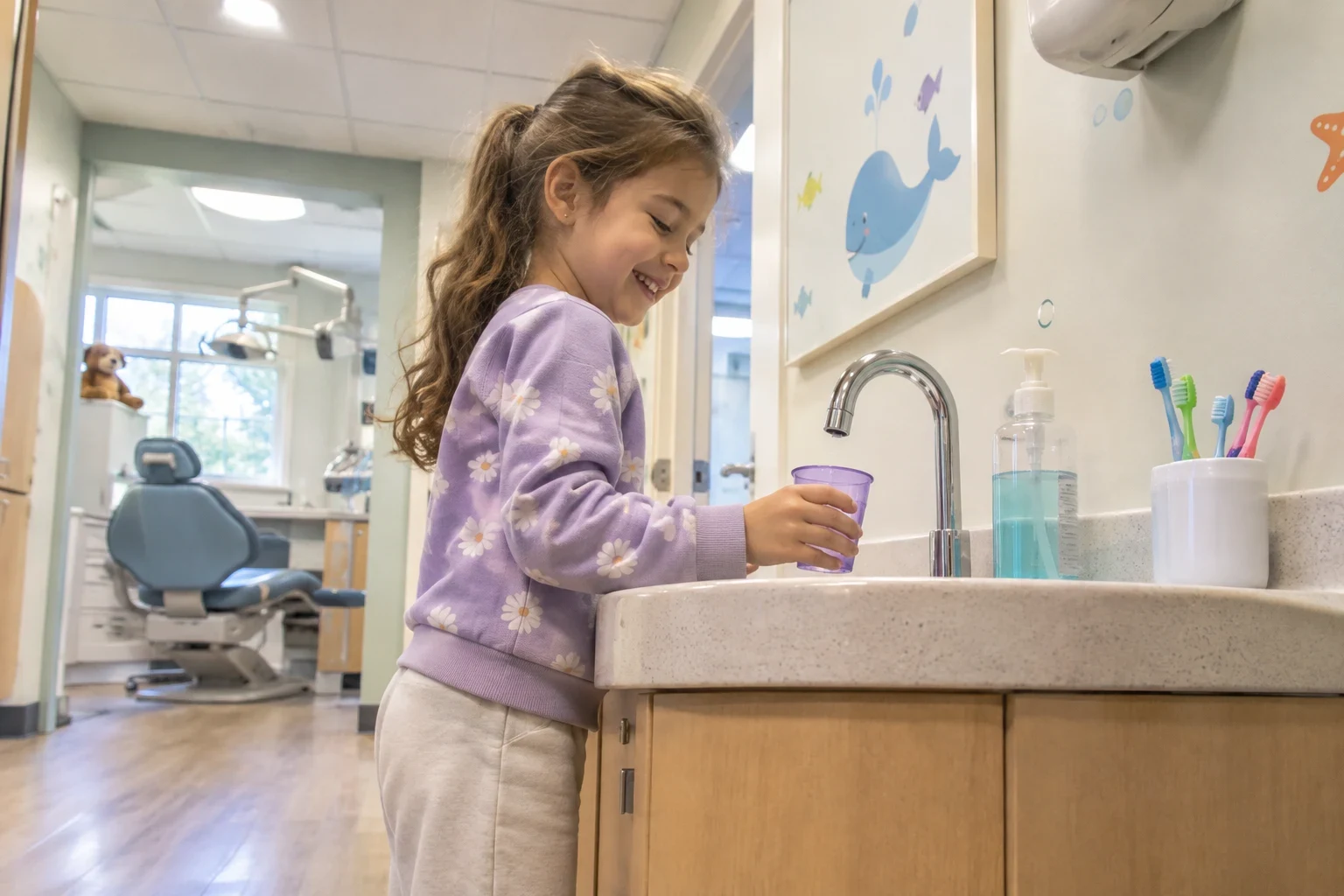
Plan your child's next fluoride visit
Pairing fluoride with routine cleanings is an easy way to keep small problems small. Families come to us from West Concord, Acton, Maynard and nearby towns, and new patients are always welcome.