ServicesPediatric Crowns
Pediatric Crowns in West Concord
When a baby tooth has too much decay for a filling, a small crown can save it until it falls out on its own. We show you what we see, explain the options and help you plan the visit before the tooth starts to hurt.
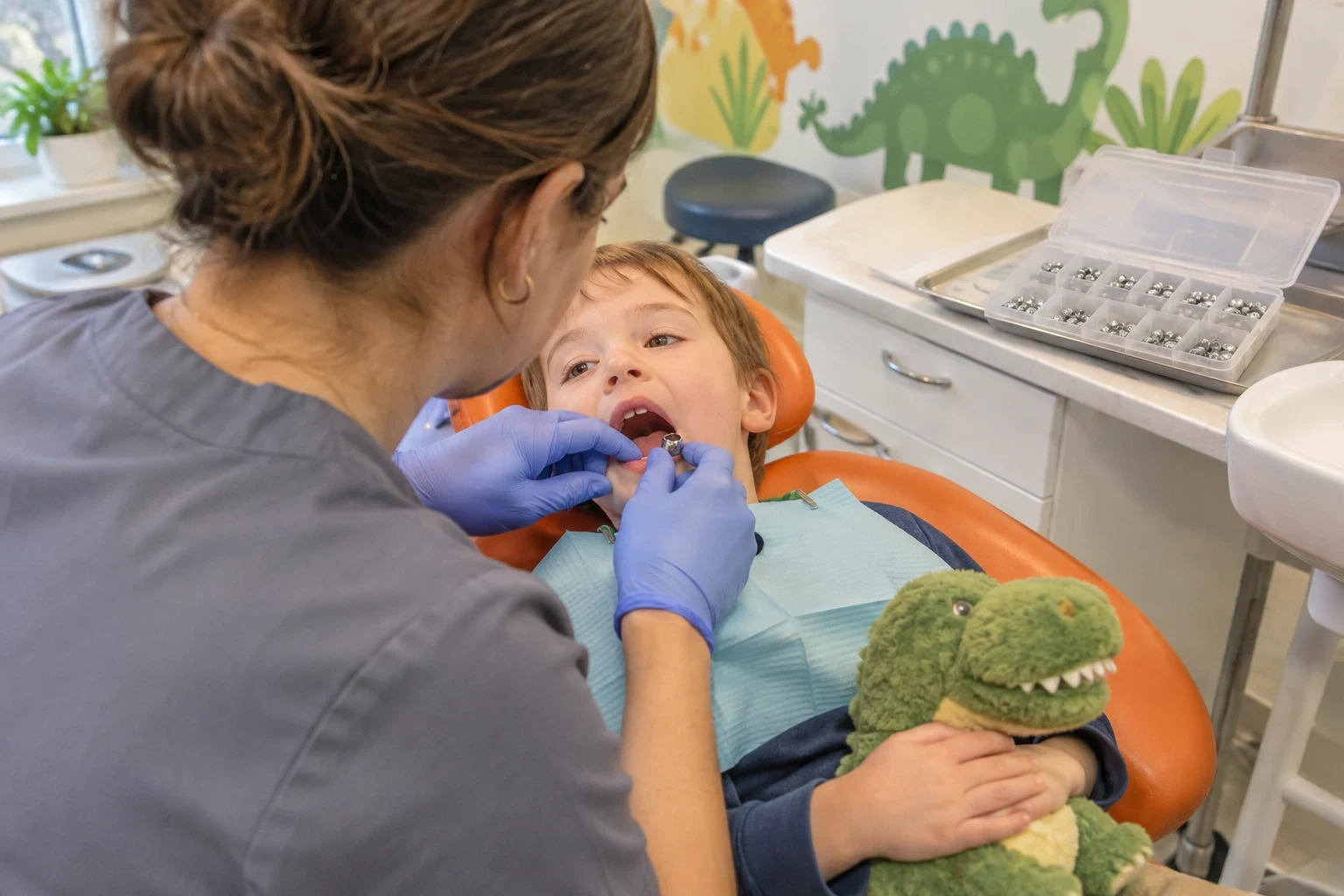
Why we sometimes crown a baby tooth
Baby teeth do more than chew. They help kids speak clearly, and they hold the exact space the adult teeth will need later. A back molar can stay in place until around age 10 to 12, so losing one early to decay can let the neighboring teeth drift and crowd the adult tooth underneath.
A crown is a small cap that covers the whole tooth. We suggest one when decay has spread across several surfaces, when a tooth has had nerve treatment, or when a filling would likely break. Fillings work well for small spots. A crown is the sturdier choice once a tooth has lost much of its structure.
Catching this early gives you choices. If we see a cavity growing at a checkup, we tell you right away, so you can pick a time that fits school, insurance and your budget instead of letting a toothache decide for you.
What pediatric crown treatment includes
Stainless steel crowns for back molars
These silver caps are the long-standing choice for baby molars. They are strong enough for daily chewing, fit in a single visit and usually last until the tooth comes out naturally.
Tooth-colored options for front teeth
For front teeth that show in your child's smile, we can discuss white crowns such as zirconia. They take a little more time to place and need a dry, still tooth, so we talk through whether they suit your child.
Nerve treatment when needed
If decay has reached the soft center of the tooth, it often needs a pulpotomy before the crown goes on. Our Root Canals page explains that step in more detail.
Numbing and comfort care
We use local anesthetic and go at your child's pace. For kids who are very anxious or need several crowns, sedation dentistry may let us finish the work in one visit.
Clear aftercare instructions
You leave knowing what to expect that evening, which foods to skip for a few hours and how to brush around the new crown.
Signs your child's tooth may need a crown
A cavity on more than one side
Decay that wraps from the chewing surface down the sides of a molar is hard to fill well. A crown covers all of it at once.
Repeat trouble with one filling
When a tooth that was already filled ends up with a cracked or loose filling again, too little sound tooth may remain to anchor a new one. A crown holds what is left together.
A dark or gray front tooth
Front teeth that darken after a fall or deep decay sometimes need nerve care and a crown to stay healthy and in place.
Wincing at cold or sweets
A child who flinches at ice cream or chews only on one side may have decay closer to the nerve than you can see from outside.
Weak or chalky enamel
Some kids have enamel that formed soft and chips or wears quickly. Crowns can protect those molars before they break down.
How a crown visit goes
- 1
Exam and X-rays
We check the tooth closely, add X-rays when they would help, and walk you through the findings on screen. You get our recommendation, why we made it and any other sensible option.
- 2
Planning the appointment
We go over how many teeth need work, which crown type fits and whether sedation makes sense. Then we find a time that works for your family and help you check what your insurance plan lists.
- 3
Numbing and preparing the tooth
Once the area is numb, we remove the decay and gently shape the tooth so the crown fits snugly. We tell your child about each sound and feeling before it happens, so nothing comes as a surprise.
- 4
Fitting and cementing
We size the crown to the tooth, check the bite and cement it in place. In most cases a single crown is finished in one appointment.
- 5
Afterward and follow-up
Your child can eat once the numbness wears off. We check the crown at regular exams and cleanings until the baby tooth comes out on its own.
What affects the cost of a pediatric crown
No two kids' mouths are alike, so we price the work after the exam instead of guessing beforehand. We go through each part of the plan with you, so you can see what you are paying for and budget ahead. For payment, you can use MasterCard, Visa or Discover, and we also take most insurance plans along with the CareCredit Patient Payment Plan.
- Crown material
- Stainless steel crowns generally cost less than tooth-colored crowns, which use different materials and need more chair time.
- Number of teeth
- Treating several teeth in one visit can mean fewer appointments overall, though the total reflects each tooth treated.
- Nerve treatment
- A tooth that needs a pulpotomy first adds a step to the visit and to the plan.
- Sedation
- If your child needs sedation to stay comfortable, that is listed as its own part of the plan so you can see it clearly.
- Your insurance plan
- Coverage for crowns varies from plan to plan. We help you read what your plan lists so fewer costs catch you off guard.
Questions parents ask about crowns
Something not covered here? (978) 733-8887
Why put a crown on a tooth that will fall out anyway?
Because some baby teeth stay for years. Saving the tooth keeps room for the adult tooth, lets your child chew comfortably and can avoid the need for a space maintainer. If a tooth is already close to falling out, we may suggest a different approach.
Will getting a crown hurt?
We make sure the area is fully numb before any work begins, so most kids notice pushing or vibration, not pain. Their gums may feel tender for a day or two once the numbness fades. Before you head out, we explain what eases that soreness and what would be worth a call.
Can my child have a white crown on a back tooth?
Sometimes. Tooth-colored crowns are available for molars, but they need a very dry, still tooth to place well. We will tell you honestly which type we think will hold up best for your child.
What happens to the crown when the tooth falls out?
It comes out together with the baby tooth. The adult tooth grows in underneath the way it normally would, and the crown has done its job.
What if the crown comes loose?
It is uncommon, but if a crown feels loose or comes off, keep it and give us a phone call to set up a visit. We will check the tooth and re-cement or replace the crown as needed.

Let's take care of that tooth together
If a checkup showed a large cavity or a tooth is bothering your child, one phone call gets you an appointment and a clear plan. We see families from West Concord and nearby towns like Acton, Maynard and Sudbury.