ServicesRoot Canals
Root Canals for Kids in West Concord
When a cavity reaches the soft nerve inside a tooth, we can often clean it out and keep the tooth in place. Your child stays numb and comfortable. You get a plain explanation of the treatment, what follows and what it will cost before anything begins.
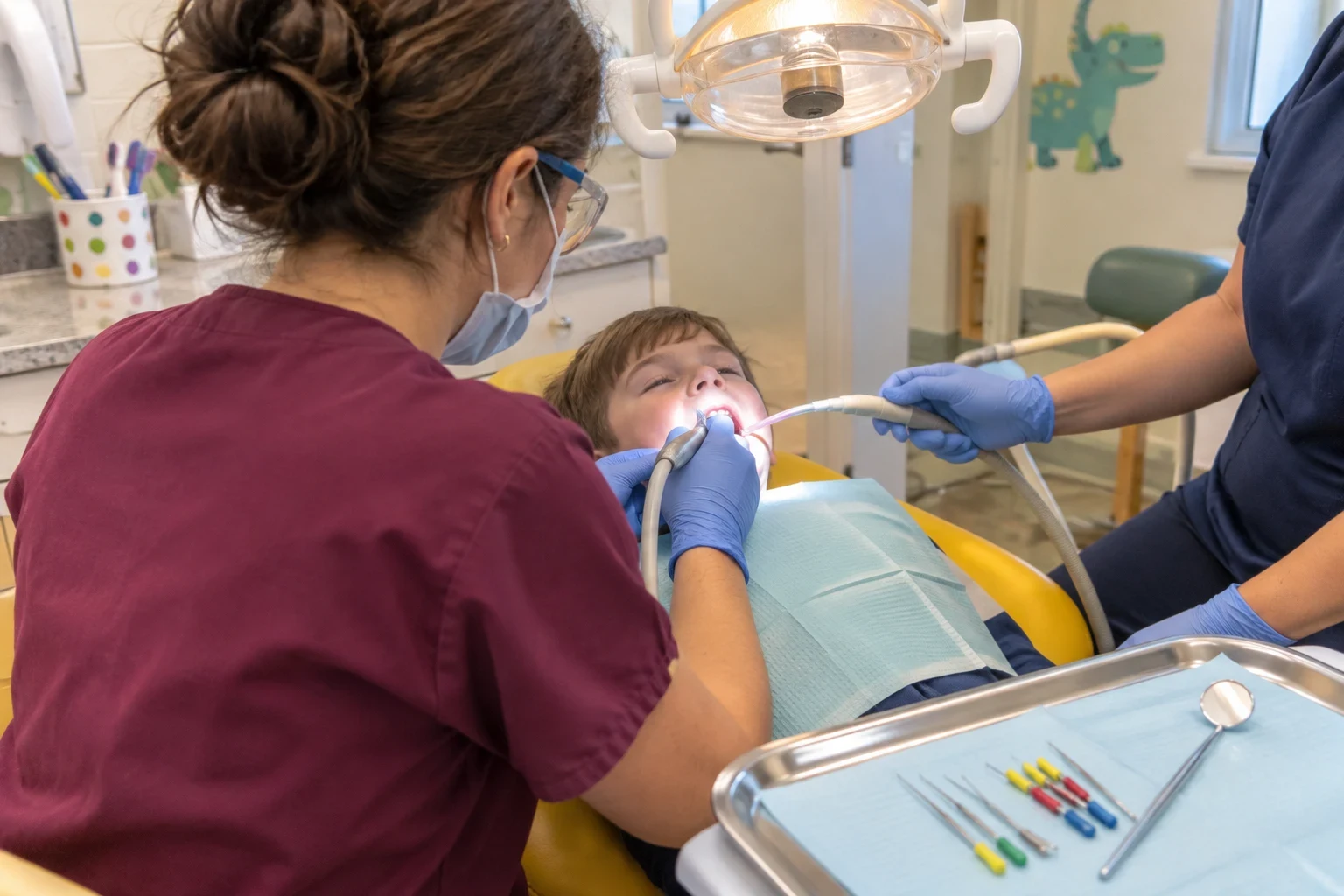
Saving a Tooth That Decay Has Reached
Every tooth has a living core called the pulp, with nerves and blood vessels. Baby teeth have thin enamel and large pulps, so a cavity in a child's tooth can reach the pulp faster than many parents expect. Once bacteria get in, the pulp becomes inflamed or infected. That is when toothaches, swelling and sensitivity show up.
For kids, this treatment comes in two forms. In the shorter version, we take out only the damaged tissue in the crown of the tooth and leave the healthy pulp in the roots alone. When infection has spread deeper, we clear the roots as well. In both cases we clean and fill the space, then cover the tooth so it can handle chewing again, most often with a crown.
A common question is why a primary tooth is worth treating when it will be replaced someday. The back baby teeth usually stay in until around age 10 to 12, reserving room for the permanent teeth growing underneath, and your child relies on them for chewing and clear speech. If one comes out too soon, the teeth beside it can shift into the gap. Treating it now is usually easier on your child than sorting out crowding later.
What Root Canal Treatment Includes
Exam and X-rays
We look at the tooth and take X-rays to see how deep the decay goes and how the roots look. This tells us whether the tooth can be saved or whether another option makes more sense.
An honest treatment answer
If the tooth is close to falling out on its own, or the infection is too advanced, we will say so. In that case we will talk you through extractions and whether a space maintainer is needed afterward.
Numbing that kids can handle
We use a topical gel first, then local anesthetic given slowly. We explain each step in kid-friendly words so nothing comes as a surprise.
Cleaning and filling the pulp space
We remove the infected tissue, disinfect the area and place a medicated filling. For baby teeth, the material is designed to work with the natural loss of the tooth later.
A protective crown
A treated tooth is weaker, so most get a crown the same day. You can read more on our Pediatric Crowns page.
Sedation if your child needs it
Some kids are very anxious or need a lot of work. We can talk with you about options from our Sedation Dentistry service ahead of time.
Signs Your Child May Need a Root Canal
A toothache that keeps coming back
Pain that wakes your child at night or lingers without a clear cause often means the nerve is involved.
Swelling or a spot on the gum
Look for a small raised blister on the gums beside a tooth. It can mean infection at the root is finding a way out. Your child may not complain about it, but it still needs a look.
Sensitivity that lingers
A quick twinge from cold is common. Sensitivity to hot or cold that lasts after the food is gone is a different story.
A darkened tooth
A tooth that turns gray after a fall can mean the pulp was damaged, even if your child seemed fine at the time.
A large cavity we are watching
If we flagged a deep cavity at a checkup, treating it soon can sometimes mean a simpler fix. Waiting gives decay time to reach the pulp.
How the Appointment Goes
- 1
Talk it through first
Before the treatment day, we go over the X-rays with you, explain what we plan to do and answer questions. You leave knowing the cost and what your insurance is likely to cover.
- 2
Getting comfortable
Your child settles into the chair and we numb the tooth gently. We check that the area is fully numb before we begin.
- 3
Treating the tooth
We isolate the tooth, remove the infected pulp, clean the space and place the filling material. Most pulpotomies on baby teeth take well under an hour.
- 4
Placing the crown
We usually fit a crown right away so the tooth is protected before your child leaves.
- 5
Aftercare at your own pace
Expect some numbness for a few hours, so we suggest soft foods and watching that your child does not bite their cheek. Mild soreness usually passes in a day or two. We check the tooth at the next regular visit.
What Affects the Cost
Before any treatment starts, we walk you through the full cost line by line so each part makes sense. That leaves you time to check your coverage and plan the visit without guessing. We accept MasterCard, Visa, Discover, most insurance plans and CareCredit Patient Payment Plan.
- Pulpotomy or pulpectomy
- Treating only the upper part of the pulp is usually the simpler job. Cleaning all the way down into the roots takes longer and adds to the total.
- Which tooth
- Front teeth and molars differ in how many roots they have and how hard they are to reach.
- Covering the tooth afterward
- A tooth that has had its pulp treated usually needs a cap to keep it from cracking. The material we use for that cap is one of the bigger pieces of the final number.
- Sedation
- If your child needs sedation to stay calm and safe, that is added to the plan and explained up front.
- Your insurance plan
- Coverage varies a great deal. We can help you understand what your plan typically pays, though your insurer makes the final call.
Root Canal Questions From Parents
Something not covered here? (978) 733-8887
Does a root canal hurt for kids?
We make sure the whole area is numb before any work begins, so what most children notice is a pushing feeling, not pain. Often the ache that brought them in eases once the infected pulp is out. A day or two of tenderness afterward is normal, and children's pain reliever used as the label directs usually handles it.
Why not just pull the baby tooth?
Sometimes that is the right choice, and we will tell you if it is. Many baby molars need to stay for years to guide adult teeth into place. Saving the tooth can avoid the need for a space maintainer and help prevent crowding.
Is this the same as an adult root canal?
Not quite. Treatment on baby teeth is usually a pulpotomy or pulpectomy, which is shorter and uses filling material suited to teeth that will eventually fall out. Adult teeth in older kids and teens are handled differently, and we explain the plan for that specific tooth.
How do I prepare my child?
Keep it simple and calm. Tell them we are going to fix a sore tooth and make it strong again. Try to avoid words like shot or drill, and let us explain the rest in kid-friendly terms.
Can this be prevented next time?
Often, yes. Regular exams and cleanings catch cavities while they are small, and sealants and fluoride treatment help protect the chewing surfaces of molars. Finding decay early usually means a filling instead of a root canal.

Get a Clear Plan for Your Child's Tooth
If your child has a sore tooth or we have been watching a deep cavity, we can look at it, explain the options and give you the cost before any work is done. Families from Concord, Acton, Maynard and nearby towns are welcome.