ServicesExtractions
Tooth Extractions for Kids in West Concord
When a baby tooth won't come out on its own, or a tooth is too damaged to save, we remove it gently and explain each step first. You'll know why it needs to come out, how the visit will go and what healing looks like before we begin.
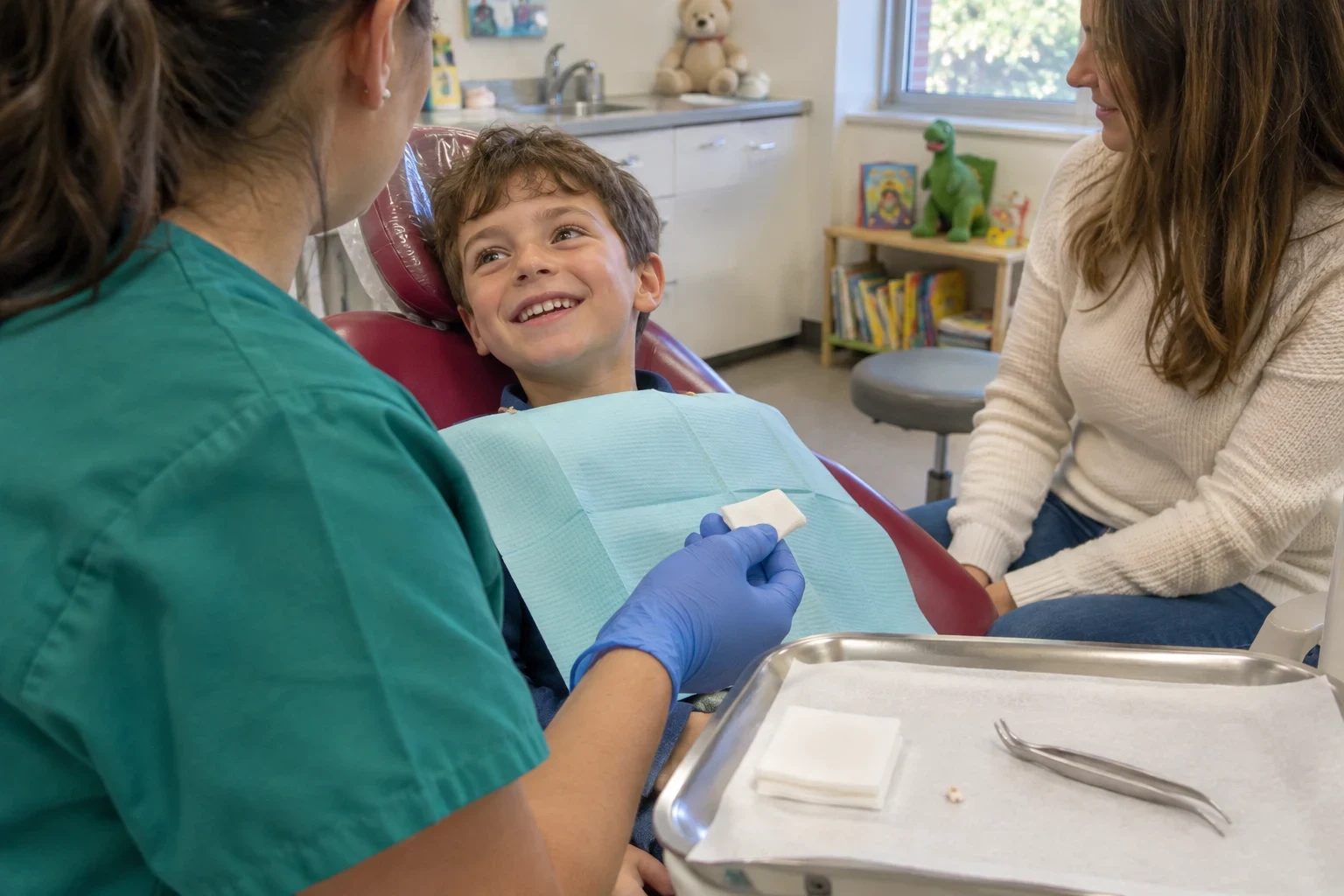
When removing a tooth is the right call
We would always rather save a tooth than remove it. Many problems can be handled with fillings, pediatric crowns or a baby root canal, and we'll tell you honestly when one of those is the better choice. Sometimes, though, taking the tooth out is the kinder option for your child.
Common reasons include a baby tooth with decay or infection too deep to repair, a stubborn baby tooth blocking the adult tooth behind it, crowding an orthodontist has asked us to address, or a tooth that cracked in a fall. For teens, it can be an adult tooth that is badly broken or never came in properly.
Because we often spot these problems at regular checkups, many extractions can be planned weeks ahead. That gives you time to schedule around school, check your insurance and prepare your child, instead of dealing with it on a day when they're already hurting.
What an extraction visit includes
An exam and X-rays first
We look at the tooth, its roots and the adult tooth underneath before recommending anything. That picture tells us whether the tooth can be saved and how it is likely to come out.
Gentle numbing
We start with a topical gel before any local anesthetic, and we talk kids through what they'll feel in simple words. Most children notice pressure, not pain.
Comfort options decided ahead
For anxious kids, very young children or several teeth at once, we can talk through sedation dentistry before the visit. You decide together at home, not in the chair.
Planning for the gap
When a baby tooth comes out early, nearby teeth can drift into the empty space and crowd the adult tooth. We'll tell you whether a space maintainer makes sense and when it should go in.
Clear aftercare
You leave with written instructions for gauze, food, brushing and what normal healing looks like, and you can reach us by phone with any questions.
When a tooth may need to come out
Tooth pain that returns
Pain that keeps coming back, especially at night or with sweets, may mean decay has reached the nerve. We'll see whether the tooth can still be treated before we discuss removing it.
A swollen spot or bump on the gum
A small, pimple-like bump beside a tooth usually signals infection. Have it checked soon, even if your child says it doesn't hurt.
A second row of teeth
Lower front adult teeth sometimes erupt behind baby teeth that never got loose. If the baby tooth still isn't wiggling after a few weeks, it may need help coming out.
A baby tooth that won't let go
When a baby tooth stays firm well after its match on the other side has fallen out, it can hold up the adult tooth or steer it out of place.
A tooth cracked in a fall
A crack that extends under the gumline often can't be fixed. We'll check how far the damage reaches and go over the options.
What happens at the appointment
- 1
Ahead of time
We review the plan with you on the phone or at an earlier checkup, including whether your child should eat beforehand and any sedation instructions. A short, calm heads-up the day before tends to help kids more than a long talk.
- 2
Settling in
Your child gets comfortable in the chair, we numb the area and give it time to take full effect. We check in with your child before starting.
- 3
Taking the tooth out
Most baby teeth come out fast with gentle, steady pressure. We use kid-friendly words like wiggling and avoid anything frightening.
- 4
Gauze, then home
Your child bites down on gauze to control bleeding while we go over aftercare with you. Most kids are back to normal by the next day.
- 5
Booking what comes next
If your child needs a space maintainer or the adult tooth needs watching, we schedule that visit before you leave so you can plan ahead.
What sets the price of an extraction
Before the visit, we review the expected cost with you so the bill matches what you were told. We take MasterCard, Visa, Discover and most insurance plans, plus the CareCredit Patient Payment Plan for families who prefer to pay over time. Booking the extraction a few weeks ahead also leaves time to confirm your coverage.
- Baby or adult tooth
- A wiggly baby tooth with short roots usually comes out more easily than an adult tooth anchored by long, solid roots.
- The tooth's position
- A tooth snapped off at the gumline, partly covered by gum or grown in at an angle needs more time and care to take out.
- Number of teeth
- Taking out more than one tooth changes the cost, though handling them in one visit can save your child extra trips to the chair.
- Sedation
- Some children do better with extra help to relax, which is a separate part of the visit with its own charge. We review the options and what each involves well ahead of the appointment.
- The next step
- A space maintainer is a separate step. We include it in the plan from the beginning so you can budget for both at once.
Extraction questions from parents
Something not covered here? (978) 733-8887
Will my child feel pain?
We numb the area first, so most kids feel pressure, not pain, while the tooth comes out. A day or two of soreness afterward is normal. We'll tell you which children's pain reliever and dose fit your child's age and weight.
Why not wait for the baby tooth to fall out on its own?
Sometimes waiting is fine, and we'll tell you when it is. But an infected baby tooth can harm the adult tooth forming below it, and a baby tooth that won't loosen can push the adult tooth off track. We'll point out on the X-ray why we suggest one path or the other.
What aftercare does my child need?
Keep the gauze in as we direct, and for the first day avoid straws, spitting and very hot foods so a clot can form. Brush gently and stay away from the spot itself at first. Call us if the bleeding doesn't ease, swelling grows after a couple of days or your child gets a fever.
What foods are okay after an extraction?
On day one, stick to soft, cool foods like yogurt, applesauce, pasta, eggs or a smoothie eaten with a spoon. Hold off on eating until the numbness fades so your child doesn't chew a cheek or lip. Most kids return to normal meals in a day or two.
Is a space maintainer needed afterward?
That depends on which tooth is removed and how soon the adult tooth is due. Front baby teeth usually don't need one, but back molars lost early often do. We check at the exam and build it into the plan.

Schedule your child's extraction on your own timeline
Call us if a tooth is troubling your child or we pointed one out at a checkup. We'll book a time that works with your family's week, and new patients can register during the same call.